
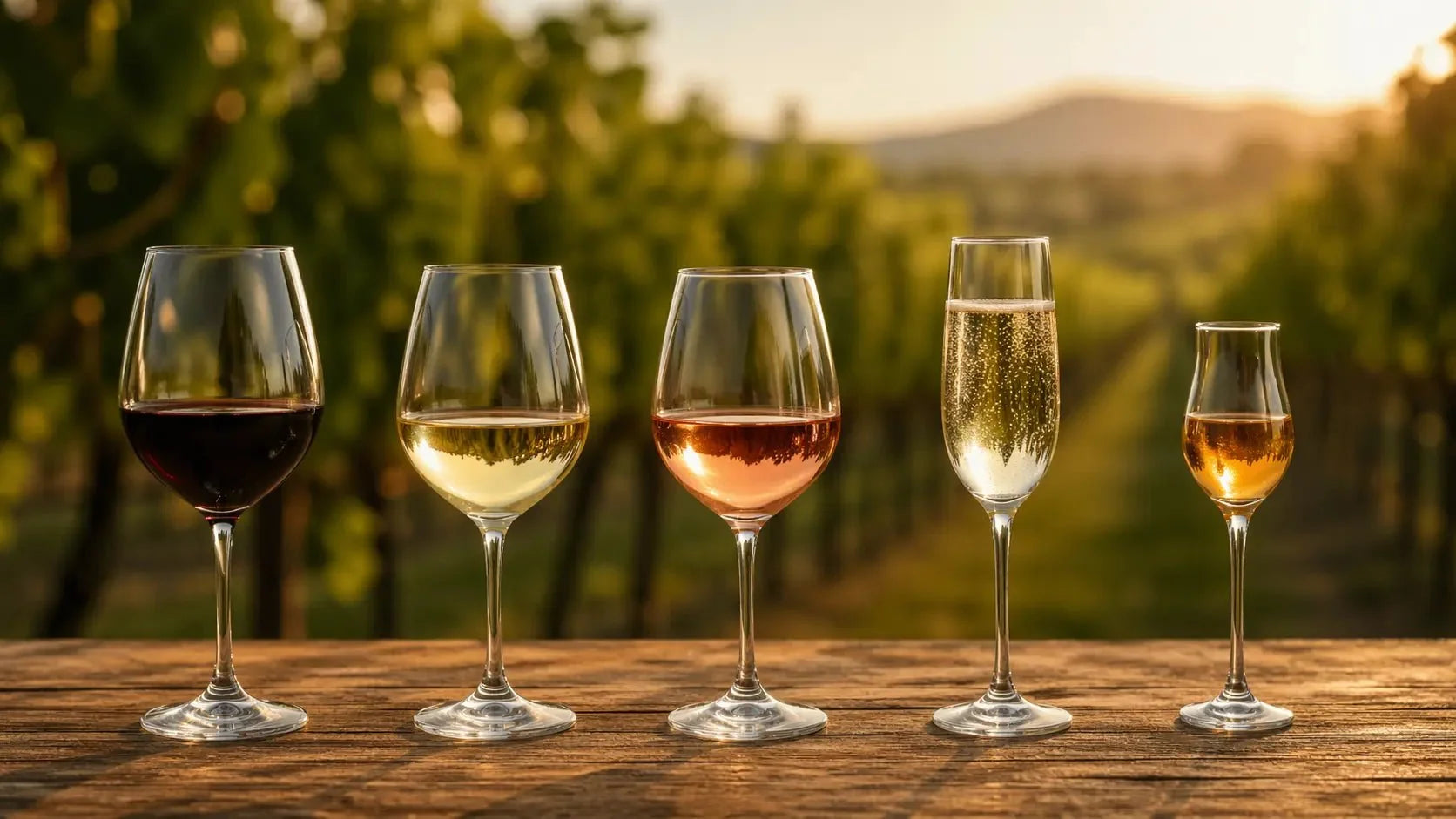
The main types of wine are red, white, rosé, sparkling, and dessert wine. Each category contains dozens of individual varietals (from bold Cabernet Sauvignon and silky Pinot Noir to crisp Sauvignon Blanc, buttery Chardonnay, and sweet Moscato) all shaped by the grape variety, growing region, and winemaking technique.
If that already feels like a lot, don't worry. Walk into any wine shop or scroll through an online collection and the sheer number of options can feel overwhelming. Cabernet or Merlot? Chardonnay or Pinot Grigio? Dry or sweet? Old World or New World? Once you understand what separates each type of wine , and what makes each one unique, choosing a bottle becomes a lot more enjoyable. Whether you're brand new to wine or looking to expand your palate, this guide covers everything you need to know.
In this guide, we will cover:
- The five main categories of wine
- Types of red wine and their flavor profiles
- Types of white wine and how they differ
- Rosé, sparkling, and dessert wines explained
- The difference between sweet and dry wine
- How to pair wine with food
- How to choose the right wine for your taste
Table of Contents
- What Is Wine?
- The Main Types of Wine
- Types of Red Wine
- Types of White Wine
- Rosé Wine
- Sparkling Wine and Champagne
- Dessert Wine and Fortified Wine
- Sweet vs. Dry Wine
- Wine and Food Pairing
- How to Choose the Right Wine
- Wine for Beginners
- FAQ
What Is Wine?
At its most basic, wine is an alcoholic beverage made from fermented grape juice. Yeast converts the natural sugars in grapes into alcohol, and the result, shaped by the grape variety, growing region, winemaking technique, and aging process, is one of the most complex and diverse drinks on the planet.
While grapes are the foundation of every wine, not all wines taste alike. The grape variety (also called the varietal), the climate where the grapes are grown, the winemaker's choices, and the type of vessel used for aging all play a role in the final flavor.
Fun fact: There are over 10,000 grape varieties used to make wine worldwide, though only a few hundred appear regularly in bottles you'll find at a store or online.
The Main Types of Wine
Wine falls into five broad categories, each with its own character and production method:
| Wine Type | Color | Key Characteristics |
|---|---|---|
| Red wine | Deep red to purple | Full-bodied, tannic, rich flavors from dark fruits |
| White wine | Pale yellow to gold | Crisp, lighter-bodied, citrus and floral notes |
| Rosé wine | Pink to salmon | Refreshing, fruity, sits between red and white |
| Sparkling wine | Varies | Bubbly, celebratory, ranges from bone-dry to sweet |
| Dessert wine | Varies | Sweet, rich, often higher in alcohol or residual sugar |
Each of these categories contains dozens (sometimes hundreds) of individual varietals and styles. Let's explore each one in depth.
Types of Red Wine
Red wine gets its color from the grape skins, which remain in contact with the juice during fermentation. This process also gives red wine its tannins: naturally occurring compounds found in grape skins, seeds, and stems that create a slightly astringent sensation on your palate and give the wine its structure and aging potential. Tannin levels, fruit flavors, body, and acidity vary widely between red varietals.

Here are the most popular types of red wine you'll encounter:
Cabernet Sauvignon
Cabernet Sauvignon is the most widely planted red grape in the world, and for good reason. It produces bold, full-bodied wines with flavors of blackcurrant, dark cherry, and cedar, often with a long, tannic finish. California's Napa Valley is renowned for its Cabernet, as are Bordeaux in France and Coonawarra in Australia.
- Body: Full
- Tannins: High
- Flavor profile: Blackcurrant, dark cherry, cedar, tobacco, dark chocolate
- Best paired with: Grilled ribeye, braised short ribs, aged cheddar
Fun fact: Cabernet Sauvignon is actually a natural cross between Cabernet Franc and Sauvignon Blanc, first identified in 17th-century Bordeaux.
Pinot Noir
Pinot Noir is one of the most beloved, and most challenging, grapes to grow. The result, when done right, is a lighter-bodied red with silky tannins, bright acidity, and elegant flavors of cherry, raspberry, and earthy mushroom. Oregon's Willamette Valley and Burgundy in France are two of the most celebrated Pinot Noir regions in the world.
- Body: Light to medium
- Tannins: Low
- Flavor profile: Red cherry, raspberry, earthy mushroom, subtle spice
- Best paired with: Salmon, roast duck, charcuterie, mushroom risotto
Merlot
Merlot is often described as the approachable cousin of Cabernet Sauvignon. It's softer, rounder, and tends to have lower tannins, making it an excellent choice if you're newer to red wine. Expect flavors of plum, black cherry, and a touch of chocolate or mocha. Merlot is also a key grape in many classic Bordeaux blends.
- Body: Medium to full
- Tannins: Medium
- Flavor profile: Plum, black cherry, chocolate, bay leaf, mocha
- Best paired with: Roasted chicken, pasta with tomato sauce, soft cheeses
Zinfandel
Zinfandel is a quintessentially American grape, with most of the world's plantings in California. Old-vine Zinfandels tend to be bold and jammy, with high alcohol and intense flavors of blackberry, pepper, and dried fruit. It also comes in a White Zinfandel rosé style, which is much sweeter and lighter in color.
- Body: Full
- Tannins: Medium
- Flavor profile: Blackberry jam, cracked pepper, vanilla, dried fruit
- Best paired with: BBQ ribs, spicy foods, pizza, aged gouda
Syrah / Shiraz
Same grape, two names: "Syrah" is the French name used in the Rhône Valley; "Shiraz" is what Australians call it. French Syrah tends to be more savory and peppery, while Australian Shiraz leans richer and more fruit-forward. Both are full-bodied with dark fruit flavors and a distinctive spicy, meaty finish.
- Body: Full
- Tannins: High
- Flavor profile: Blackberry, smoked meat, cracked pepper, dark chocolate
- Best paired with: Grilled lamb, hearty stews, aged hard cheeses
Red Wine Comparison at a Glance
| Varietal | Body | Tannins | Key Flavors | Best Pairing |
|---|---|---|---|---|
| Cabernet Sauvignon | Full | High | Blackcurrant, cedar | Red meat, aged cheese |
| Pinot Noir | Light-Medium | Low | Cherry, earth, raspberry | Salmon, duck |
| Merlot | Medium-Full | Medium | Plum, chocolate, mocha | Pasta, chicken |
| Zinfandel | Full | Medium | Blackberry, pepper, jam | BBQ, spicy food |
| Syrah / Shiraz | Full | High | Dark fruit, pepper, smoke | Lamb, stews |
Ready to explore? Browse our red wine collection
Types of White Wine
White wine is typically made from green or yellow grapes, with the skins removed before or shortly after pressing. This produces a lighter, crisper style of wine that ranges from bone-dry to quite sweet. White wines are generally low in tannins, but acidity plays a major role in their structure and food-friendliness.
If the dry end of that range is what interests you, our guide to dry white wine covers the driest varieties in detail, with a comparison table and food pairings for each style.

Chardonnay
Chardonnay is the world's most popular white grape variety, and one of the most versatile. Unoaked Chardonnay is crisp and mineral-driven, while oak-aged Chardonnay takes on rich, buttery flavors of vanilla, toast, and cream. California Chardonnay tends toward the richer end of the spectrum; French Burgundy Chardonnay is leaner and more mineral.
- Sweetness: Dry
- Acidity: Medium
- Flavor profile: Green apple, lemon, vanilla, butter (if oaked), brioche
- Best paired with: Lobster, roast chicken, creamy pasta, soft brie
Is Chardonnay dry? Yes, most Chardonnay is fully dry. The ripe fruit and oak flavors can make it seem subtly sweet, but it contains very little residual sugar.
Sauvignon Blanc
Sauvignon Blanc is one of the most distinctive white wines, and one of the most refreshing. It's almost always bone-dry, with high acidity and vivid flavors of grapefruit, lime, green herbs, and fresh-cut grass. New Zealand's Marlborough region made this style world-famous; France's Loire Valley produces the benchmark Sancerre and Pouilly-Fumé styles.
- Sweetness: Dry
- Acidity: High
- Flavor profile: Grapefruit, lime zest, fresh herbs, passionfruit
- Best paired with: Oysters, sushi, goat cheese, light salads
Pinot Grigio / Pinot Gris
Same grape, two very different styles depending on where it's grown. Italian Pinot Grigio is light, crisp, and clean: perfect for easy drinking. Alsatian Pinot Gris from France is richer, more aromatic, and sometimes off-dry. Oregon also produces an excellent style somewhere between the two.
- Sweetness: Dry to off-dry (depending on origin)
- Acidity: Medium to high
- Flavor profile: Green apple, pear, citrus, almond
- Best paired with: Light seafood, mild cheeses, antipasto
Riesling
Riesling is one of the most misunderstood white wines. Many people assume it's always sweet, but dry Riesling is actually one of the most versatile food wines in the world. It has naturally high acidity and an aromatic character that ranges from floral and peachy to intensely mineral. Germany's Mosel Valley, Alsace in France, and Australia's Clare Valley produce some of the finest examples.
- Sweetness: Ranges from bone-dry to lusciously sweet
- Acidity: High
- Flavor profile: Peach, apricot, lime, white flowers, petrol (in aged bottles)
- Best paired with: Spicy Asian dishes, Thai food, pork, fresh fruit tarts
White Wine Comparison at a Glance
| Varietal | Sweetness | Acidity | Key Flavors | Best Pairing |
|---|---|---|---|---|
| Chardonnay | Dry | Medium | Apple, vanilla, butter | Chicken, lobster |
| Sauvignon Blanc | Dry | High | Grapefruit, fresh herbs | Seafood, salads |
| Pinot Grigio | Dry | Med-High | Green apple, citrus | Light seafood, appetizers |
| Riesling | Dry to Sweet | High | Peach, floral, lime | Spicy food, Asian cuisine |
Ready to explore? Browse our white wine collection
Rosé Wine
Rosé wine is made from red grapes, but the grape skins are left in contact with the juice for only a short time (typically a few hours). This brief contact gives rosé its signature pink color and a flavor profile that falls somewhere between red and white wine: fruity and refreshing, but lighter and crisper than most reds.
The most celebrated rosés come from Provence in southern France: pale salmon in color, bone-dry, and delicately flavored with strawberry, peach, and a hint of cream. Spanish rosado and Italian rosato offer their own distinct regional styles.

One important note: Rosé is not the same as White Zinfandel. While White Zinfandel is technically a rosé, it's a much sweeter, simpler style quite different from dry Provence rosé. Both are enjoyable; they're just very different wines aimed at different palates.
- Body: Light
- Sweetness: Ranges from bone-dry to slightly sweet
- Flavor profile: Strawberry, watermelon, peach, cream, citrus
- Best paired with: Salads, grilled vegetables, light pasta, charcuterie boards, and almost anything on a warm afternoon
Sparkling Wine and Champagne
Sparkling wine is any wine with significant carbonation. The bubbles can come from a secondary fermentation in the bottle (the traditional method) or from fermentation in a pressurized tank (the Charmat method). The result is a celebratory, versatile wine that ranges from crisp and bone-dry to rich and lightly sweet.

Champagne
Champagne is sparkling wine made exclusively in the Champagne region of northeastern France, using Chardonnay, Pinot Noir, and Pinot Meunier grapes. The traditional method produces tiny, persistent bubbles and complex flavors of brioche, green apple, and toasted yeast. Champagne ranges from "Brut Nature" (bone-dry) to "Demi-Sec" (noticeably sweet). For the full scale and why "Extra Dry" is sweeter than "Brut", see our guide to Brut vs Extra Dry.
Fun fact: True Champagne can only come from France's Champagne appellation. Sparkling wine made identically elsewhere (even in California) cannot legally be called Champagne.
Prosecco
Prosecco is Italy's answer to Champagne: lighter, fruitier, and generally more affordable. Made in the Veneto region from Glera grapes using the Charmat method, it has larger, more effervescent bubbles and fresh flavors of green apple, pear, and white flowers. It's the essential base for the Aperol Spritz.
Cava
Cava is Spain's traditional-method sparkling wine, made primarily in Catalonia using local grape varieties. Same production process as Champagne, but at a significantly lower price point. Dry, crisp, and lightly earthy. Excellent value for a celebration.
| Sparkling Wine | Origin | Style | Key Flavors |
|---|---|---|---|
| Champagne | France | Dry to sweet | Brioche, green apple, yeast |
| Prosecco | Italy | Dry to off-dry | Green apple, pear, floral |
| Cava | Spain | Dry | Citrus, almond, earthy |
Dessert Wine and Fortified Wine
Dessert wines are sweeter wines typically enjoyed in small amounts alongside dessert, or in place of it. Their sweetness comes from residual sugar left after fermentation, from dried grapes with concentrated sugars, or from grapes affected by botrytis (noble rot), which naturally intensifies sweetness and complexity.
Port is among the most famous styles, made in Portugal's Douro Valley by adding grape spirit (brandy) to partially fermented wine, which stops fermentation early and preserves natural sweetness. Port is rich, warming, and deeply complex, pairing beautifully with dark chocolate or blue cheese.

Other notable dessert wines include:
- Sauternes (France): made from botrytized Sémillon, intensely sweet with flavors of honey, apricot, and marmalade
- Moscato d'Asti (Italy): lightly sparkling, low-alcohol, irresistibly fruity and floral
- Ice Wine (Canada and Germany): made from grapes frozen naturally on the vine, producing concentrated sweetness and bright acidity
- Late Harvest Riesling: grapes picked late in the season for extra sugar concentration
Sweet vs. Dry Wine: What's the Difference?
One of the most common questions wine drinkers ask is: "Is this wine sweet or dry?" The answer comes down to residual sugar, meaning the amount of sugar left in the wine after fermentation is complete.
- Dry wine has little to no residual sugar. Most red wines are dry, as are many whites like Chardonnay, Sauvignon Blanc, and Pinot Grigio.
- Off-dry wine has a hint of sweetness without being overtly sweet. Many Rieslings and Gewürztraminers fall here.
- Sweet wine has noticeable, intentional sweetness, like Moscato, White Zinfandel, or Port.
Worth noting: fruit-forward wines can taste "sweet" even when technically dry. A ripe, jammy Zinfandel or a lush Chardonnay may seem sweet due to their fruit character, even if they contain very little actual residual sugar.
| Wine Style | Residual Sugar | Examples |
|---|---|---|
| Bone dry | <1 g/L | Muscadet, Chablis, Brut Nature Champagne |
| Dry | 1–10 g/L | Cabernet Sauvignon, Sauvignon Blanc, Pinot Noir |
| Off-dry | 10–35 g/L | Riesling Spätlese, Pinot Gris d'Alsace |
| Sweet | 35–120 g/L | Moscato, White Zinfandel, late harvest Riesling |
| Very sweet | 120+ g/L | Port, Sauternes, Ice Wine |
Wine and Food Pairing: A Simple Guide
Wine and food pairing doesn't require a sommelier certification. A few core principles cover most situations:
- Match weight with weight. Light wines (Pinot Grigio, Pinot Noir) with lighter dishes. Fuller wines (Cabernet, oaked Chardonnay) with richer dishes.
- Acidity cuts through fat. High-acid wines like Sauvignon Blanc and Riesling work beautifully with fatty or fried foods.
- Tannins love protein. Tannic reds (Cabernet, Syrah) pair brilliantly with red meat; the protein softens the tannins and the wine opens up.
- Match the region. Italian wine with Italian food, Spanish wine with Spanish cuisine, as regional traditions evolved for a reason.
| If you're eating… | Try this wine |
|---|---|
| Grilled steak or lamb | Cabernet Sauvignon, Syrah, Malbec |
| Salmon or tuna | Pinot Noir, unoaked Chardonnay |
| Pasta with meat or vegetable sauces | Chianti, Merlot, Barbera |
| Roast chicken | Chardonnay, Pinot Gris |
| Seafood or sushi | Pinot Grigio, Champagne |
| Spicy dishes | Off-dry Riesling, Gewürztraminer |
| Dark chocolate | Port, Zinfandel |
| Cheese board | Varies widely (see below) |

Quick wine and cheese guide: - Soft, creamy cheeses (Brie, Camembert) → Chardonnay, Champagne - Aged cheddar → Cabernet Sauvignon, Merlot - Blue cheese → Port, Sauternes - Fresh goat cheese → Sauvignon Blanc
How to Choose the Right Wine for You
With so many options, choosing a wine can feel like a guessing game. It doesn't have to be. Start with your flavor preferences, and use this as your guide:
| If you prefer… | Start with this | Then explore |
|---|---|---|
| Bold, rich red wines | Cabernet Sauvignon | Syrah, Malbec, Barolo |
| Smooth, easy-drinking reds | Merlot | Pinot Noir, Grenache |
| Crisp, refreshing whites | Pinot Grigio | Sauvignon Blanc, Albariño |
| Rich, full-bodied whites | Oaked Chardonnay | Viognier, White Burgundy |
| Something sweet | Moscato | Off-dry Riesling, White Zinfandel |
| Bubbles | Prosecco | Cava, Champagne |
| Light and versatile | Dry rosé | Pinot Noir, Pinot Grigio |
One simple rule: If you're unsure where to start, begin with Merlot for reds and Pinot Grigio for whites. Both are approachable, crowd-pleasing, and won't overwhelm. From there, you can venture into bolder territory.
Wine for Beginners: Where to Start
If you're new to wine, don't overthink it. Here are the best entry points by style:
Beginner-friendly red wines: - Merlot: Soft, plummy, and low in harsh tannins. Easy to drink with or without food. - Pinot Noir: Light-bodied and elegant, with bright red fruit. A great gateway to more complex reds.
Beginner-friendly white wines: - Pinot Grigio: Crisp, light, and refreshing. Hard to go wrong with. - Unoaked Chardonnay: Fresh and fruit-forward, without the heavier oak character that puts some people off. - Riesling (off-dry): If you like a hint of sweetness, this is your wine.
Not sure at all? Start with a dry Provence rosé. It bridges the gap between red and white, pairs with almost everything, and introduces you to the world of wine without commitment.
Frequently Asked Questions About Wine
What are the main types of wine? The five main types of wine are red, white, rosé, sparkling, and dessert wine. Within each category there are dozens of individual grape varietals , such as Cabernet Sauvignon and Pinot Noir for reds, and Chardonnay and Sauvignon Blanc for whites, each with its own distinct flavor profile.
What is the difference between red and white wine? Red wine is made from dark-skinned grapes fermented with the skins on, which gives it tannins, deeper color, and bolder flavors. White wine uses light-skinned grapes (or removes the skins early), producing a lighter, crisper style with less tannin and more citrus and floral notes.
What is the difference between sweet and dry wine? The difference comes down to residual sugar, meaning the amount of sugar left after fermentation. Dry wines have little to no residual sugar. Sweet wines retain more. Most red wines are dry; sweetness is more common in white, rosé, and dessert wines. Fruit-forward wines can taste "sweet" even when technically dry.
What is the sweetest type of wine? Dessert wines are typically the sweetest: Port, Sauternes, Ice Wine, and late-harvest Riesling among them. Among everyday wines, Moscato and White Zinfandel are popular sweet options with approachable, fruit-forward flavors.
What wine is best for beginners? Light, approachable reds like Merlot or Pinot Noir and easy-drinking whites like Pinot Grigio or unoaked Chardonnay are excellent starting points. If you prefer something slightly sweet, an off-dry Riesling or Moscato is a great entry.
How many types of wine grapes are there? There are over 10,000 grape varieties used to make wine worldwide, though only a few hundred appear regularly in bottles sold commercially. The most widely planted varieties include Cabernet Sauvignon, Merlot, Chardonnay, Sauvignon Blanc, and Pinot Noir.
Does wine go bad after opening? Yes, most wines begin to oxidize once opened. A re-corked red wine will typically last 3–5 days; whites and rosés 2–3 days. Sparkling wine loses its bubbles within 1–2 days even with a stopper. Fortified wines like Port last considerably longer, up to 2–4 weeks refrigerated.
Final Thoughts
Wine is one of the most diverse and rewarding drinks in the world. Whether you're drawn to bold, structured reds, crisp refreshing whites, or something bubbly and celebratory, there's a bottle out there that's perfect for you. You just have to explore.
Ready to find your next favorite wine? Here are a few good starting points:
- Try a varietal you've never had: commit to one new wine per month and take notes on what you like
- Explore wine regions: a California Chardonnay and a French Burgundy are the same grape but entirely different wines
- Pair wine with a meal: wine almost always tastes better with the right food alongside it
- Don't stress the price: some of the most enjoyable wines are in the $20–$40 range
Check out our full wine collection at Keg N Bottle, from bold California Cabernets and silky Oregon Pinot Noirs to crisp Italian whites and elegant French rosés, we carry a wide range for every taste, occasion, and budget.