
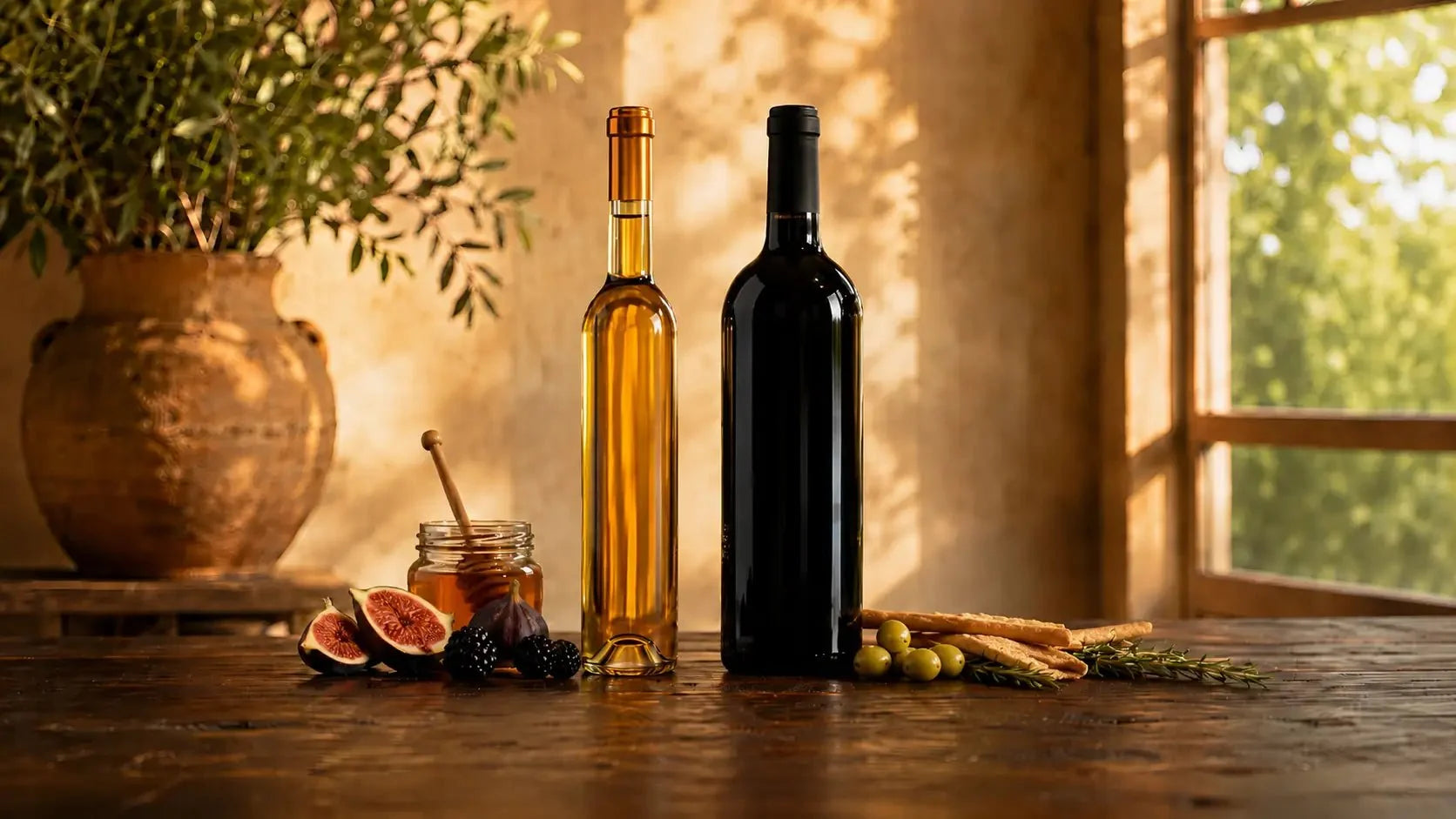
The difference between sweet and dry wine comes down to one thing: residual sugar, meaning the amount of sugar left in the wine after fermentation is complete. Dry wines have very little residual sugar. Sweet wines retain more. Everything else, the fruit flavors, the body, the color, is secondary to that single distinction.
If you have ever stood in a wine shop wondering whether a bottle is going to taste like dessert or like something more restrained, this guide is for you.
In this guide, we will cover:
- What "dry" actually means in wine
- The difference between sweet and dry red wine
- The difference between sweet and dry white wine
- How to tell if a wine is sweet or dry before you open it
- Which style is right for you
Table of Contents
- What Does "Dry" Mean in Wine?
- How Sweetness Levels Are Measured
- Sweet vs Dry Red Wine
- Sweet vs Dry White Wine
- Why Some Dry Wines Taste Sweet
- How to Tell If a Wine Is Sweet or Dry
- Sweet vs Dry: Which Should You Choose?
- FAQ
What Does "Dry" Mean in Wine?
"Dry" in wine does not mean dehydrated, tannic, or lacking in flavor. It simply means that there is little to no residual sugar left after fermentation. During winemaking, yeast consumes the natural grape sugars and converts them into alcohol. When fermentation runs to completion, almost all the sugar is gone and the result is a dry wine.
A sweet wine, by contrast, is one where fermentation is stopped early or where extra sugar is added back after fermentation, leaving more residual sugar in the finished wine.
Fun fact: The word "dry" as a wine descriptor dates back centuries, and simply means the opposite of sweet. It has nothing to do with how the wine feels in your mouth or how much water is in it.
Not familiar with the main wine categories yet? Read our complete overview: Types of Wine: The Complete Guide to Every Variety
How Sweetness Levels Are Measured
Winemakers measure residual sugar in grams per liter (g/L). Here is how the main sweetness levels break down:
| Sweetness Level | Residual Sugar | What It Tastes Like | Common Examples |
|---|---|---|---|
| Bone dry | Under 1 g/L | No perceptible sweetness | Muscadet, Chablis, Brut Nature Champagne |
| Dry | 1-10 g/L | Crisp, clean, no sweetness | Cabernet Sauvignon, Pinot Noir, Sauvignon Blanc |
| Off-dry | 10-35 g/L | A hint of sweetness | Riesling Spätlese, Pinot Gris d'Alsace |
| Medium sweet | 35-120 g/L | Noticeably sweet | Moscato, White Zinfandel, Lambrusco |
| Very sweet | 120+ g/L | Rich, dessert-like sweetness | Port, Sauternes, Ice Wine |
Most table wines, the kind you pour with dinner, fall into the dry or off-dry category. The truly sweet styles are either dessert wines or wines specifically made for drinkers who prefer sweetness.
Sweet vs Dry Red Wine
Dry Red Wine
The vast majority of red wines are dry. During fermentation, the grape sugars are almost entirely converted into alcohol, leaving a wine with little to no residual sugar. What you taste in a dry red is not sweetness but fruit: the ripe berry, cherry, and plum flavors come from the grape itself, not from sugar.
Common dry red wines include:
| Wine | Flavor Profile | Body |
|---|---|---|
| Cabernet Sauvignon | Blackcurrant, cedar, dark chocolate | Full |
| Pinot Noir | Red cherry, raspberry, earthy mushroom | Light-Medium |
| Merlot | Plum, black cherry, mocha | Medium-Full |
| Syrah / Shiraz | Blackberry, smoked meat, cracked pepper | Full |
| Malbec | Dark plum, blackberry, violet, cocoa | Full |
| Chianti (Sangiovese) | Sour cherry, tomato leaf, leather | Medium |
Is Cabernet Sauvignon sweet?
No. Despite its ripe, dark fruit flavors and sometimes jammy character, Cabernet Sauvignon is a fully dry wine. The fruit intensity can give an impression of sweetness, but the residual sugar content is very low.
Sweet Red Wine
Sweet red wines are less common than dry reds, but they exist and have a loyal following. They tend to be lighter, fruitier, and more approachable for drinkers who are newer to wine or who simply prefer sweetness.
Popular sweet red wines include:
| Wine | Sweetness Level | Flavor Profile |
|---|---|---|
| Lambrusco (amabile) | Medium sweet | Strawberry, cherry, light fizz |
| White Zinfandel | Medium sweet | Watermelon, strawberry, light and fruity |
| Brachetto d'Acqui | Sweet | Raspberry, rose petals, lightly sparkling |
| Red Moscato | Sweet | Berry jam, grape, floral |
| Port | Very sweet | Dried fruit, chocolate, walnut, warming alcohol |
A note on White Zinfandel: despite the name, White Zinfandel is technically a rosé, not a red wine. It is made from Zinfandel grapes but the skins are removed early, producing a pink, sweet wine that is very different from a typical dry Zinfandel red.
Browse our full selection of red wines!

Sweet vs Dry White Wine
Dry White Wine
Most everyday white wines are dry. Sauvignon Blanc, Chardonnay, and Pinot Grigio, three of the most popular white wines in the world, are all fully dry. Like dry reds, their fruit character (lemon, green apple, pear) comes from the grape itself, not from residual sugar.
Common dry white wines include:
| Wine | Flavor Profile | Acidity |
|---|---|---|
| Sauvignon Blanc | Grapefruit, lime, fresh herbs | High |
| Chardonnay (unoaked) | Green apple, lemon, mineral | Medium |
| Chardonnay (oaked) | Vanilla, butter, toasted oak | Medium |
| Pinot Grigio | Green apple, pear, citrus, almond | Medium-High |
| Albariño | Peach, apricot, saline, floral | High |
| Vermentino | Lime, white flowers, almond, slight bitterness | High |
Want to go deeper on the dry end? Our full guide to dry white wine varieties compares eleven of them side by side, and covers how to spot a dry bottle on the shelf before you buy.
Is Chardonnay sweet?
No, most Chardonnay is dry. The rich, ripe fruit and oak-influenced vanilla and butter flavors can make it seem sweet, but the residual sugar content is very low. Oaked Chardonnay in particular can trick you, but it is still a dry wine.
Sweet White Wine
Sweet white wines range from lightly off-dry styles that pair beautifully with spicy food, to intensely sweet dessert wines meant to be sipped slowly at the end of a meal.
Popular sweet white wines include:
| Wine | Sweetness Level | Flavor Profile |
|---|---|---|
| Moscato d'Asti | Medium sweet | Peach, apricot, orange blossom, light fizz |
| White Zinfandel | Medium sweet | Watermelon, strawberry, candy |
| Riesling (Spätlese) | Off-dry to sweet | Peach, lime, honey, floral |
| Gewürztraminer | Off-dry | Lychee, rose, ginger, tropical fruit |
| Sauternes | Very sweet | Honey, apricot, marmalade, botrytis complexity |
| Ice Wine | Very sweet | Concentrated peach, apricot, electric acidity |
Fun fact: Germany uses a classification system based on ripeness at harvest to indicate sweetness in Riesling. "Kabinett" is the lightest and driest; "Spätlese" and "Auslese" are progressively riper and sweeter; "Beerenauslese" and "Trockenbeerenauslese" are rare, intensely sweet dessert wines.
Shop our white wine collection!
Why Some Dry Wines Taste Sweet
One of the most common sources of confusion in wine is this: a wine can taste sweet without actually being sweet. Several factors make a dry wine seem sweeter than it really is:
Ripe fruit flavors. A wine made from very ripe grapes, like an Australian Shiraz or a California Zinfandel, will have intense berry and jam aromas that the brain associates with sweetness, even if the wine is technically dry.
Oak aging. Vanilla and caramel notes from oak barrels can register as sweetness on the palate, even when there is no residual sugar present.
Alcohol. Higher alcohol wines (14%+ ABV) often feel slightly warm and sweet, which can mimic sugar.
Low acidity. Wines with lower acidity tend to taste rounder and fuller, which can feel like sweetness compared to a crisp, high-acid wine.
This is why learning to read a wine label, rather than relying entirely on taste impressions, is useful when you are looking for a genuinely sweet or genuinely dry bottle.
How to Tell If a Wine Is Sweet or Dry
Reading the Label
Wine labels do not always state the sweetness level explicitly, but there are reliable clues:
For sparkling wine, sweetness is clearly indicated on the label:
| Label Term | Sweetness |
|---|---|
| Brut Nature / Zero Dosage | Bone dry |
| Extra Brut | Very dry |
| Brut | Dry |
| Extra Dry | Off-dry (confusingly named) |
| Sec / Dry | Medium sweet |
| Demi-Sec | Sweet |
| Doux | Very sweet |
"Extra Dry" is the term that confuses most shoppers. Our guide to the sparkling wine sweetness scale explains it, with the exact sugar level for each label term.
For still wines, look for these signals:
- "Dry" or "Secco" or "Sec" on the label is a direct indicator
- High alcohol (13.5%+) usually means the fermentation ran to completion, making it dry
- Low alcohol (under 11%) often indicates residual sugar was preserved, especially in white wines like Riesling and Moscato
- "Late Harvest," "Vendange Tardive," or "Auslese" on white wines signals sweetness
- "Amabile" or "Dolce" on Italian wines means medium-sweet to sweet
Grape Variety as a Guide
If you know the grape, you can often predict the sweetness level:
| Almost always dry | Often off-dry or sweet |
|---|---|
| Cabernet Sauvignon | Moscato |
| Pinot Noir | White Zinfandel |
| Chardonnay | Riesling (varies widely) |
| Sauvignon Blanc | Gewürztraminer |
| Pinot Grigio | Lambrusco (varies) |

Sweet vs Dry: Which Should You Choose?
Neither sweet nor dry is objectively better. The right choice depends entirely on your palate, the occasion, and what you are pairing the wine with.
Choose dry wine if you: - Are pairing wine with a savory meal - Prefer a more complex, less immediately approachable style - Are new to wine and want to develop your palate broadly - Are following the preferences of most wine regions and traditions
Choose sweet or off-dry wine if you: - Are newer to wine and find dry wines too austere or bitter - Are pairing with spicy food (sweetness balances heat beautifully) - Want something for dessert or a sweet occasion - Simply prefer sweeter flavors and there is absolutely nothing wrong with that
| Food Situation | Recommended Style |
|---|---|
| Steak or red meat | Dry red (Cabernet, Syrah) |
| Spicy Thai or Indian | Off-dry Riesling or Gewürztraminer |
| Sushi or light seafood | Dry white (Pinot Grigio, Sauvignon Blanc) |
| Cheese board | Varies (dry red for aged cheeses, sweet for blue) |
| Dessert | Sweet wine (Moscato, Port, Sauternes) |
| Summer afternoon | Dry rosé or off-dry white |
| Just starting out | Off-dry white or light sweet red |
Frequently Asked Questions
Is red wine sweet or dry?
Most red wines are dry. The fruit flavors in red wine (cherry, plum, blackberry) come from the grape, not from sugar. However, sweet red wines do exist: White Zinfandel, Lambrusco amabile, Red Moscato, and Port are all examples of red or rosé wines with noticeable sweetness.
Is Moscato sweet or dry?
Moscato is a sweet wine. Most Moscato wines, including Moscato d'Asti and Pink Moscato, have significant residual sugar and are made to taste fruity and sweet, with flavors of peach, apricot, and orange blossom. If you enjoy sweeter wines, Moscato is one of the most approachable and widely available options. Moscato d'Asti is also lightly sparkling and lower in alcohol, around 5-6% ABV, making it a popular choice for dessert or as an aperitif.
Is Merlot sweet or dry?
Merlot is a dry wine. Like most red wines, Merlot undergoes full fermentation, which converts nearly all grape sugars into alcohol. The result is a wine with very little residual sugar. Merlot is known for its soft tannins, round body, and flavors of plum, black cherry, and mocha, which can make it feel smooth and approachable, but it is not sweet. If Merlot tastes sweet to you, it is likely the ripe fruit character or the low acidity giving that impression, not actual sugar.
Is Riesling sweet or dry?
Riesling can be either sweet or dry, depending on the style and origin. German Riesling in particular ranges from bone dry (Kabinett, Trocken) to intensely sweet (Beerenauslese, Trockenbeerenauslese). Alsatian Riesling from France tends to be dry. New World Rieslings from Australia and the United States are often off-dry. The label is your best guide: look for "Trocken" for dry, or check the sweetness classification if it is a German bottle. When in doubt, lower alcohol (under 10% ABV) usually signals more residual sugar.
Is rosé wine sweet or dry?
Rosé wine can be either sweet or dry, and the style varies widely. Dry rosé, such as Provence rosé from France, is crisp, pale pink, and has no perceptible sweetness. It is one of the most popular wine styles in the world precisely because of its freshness and versatility with food. Sweet rosé, such as White Zinfandel or Pink Moscato, is noticeably fruity and sweet, with lower alcohol and a lighter body. As a general rule, pale rosés from France and Spain tend to be dry; brighter pink rosés from the United States tend to be sweeter.
Is Prosecco sweet or dry?
Most Prosecco is dry or extra dry. The most common style you will find on the market is Prosecco Brut, which has very little residual sugar and tastes crisp and refreshing. Prosecco Extra Dry is slightly less dry than Brut (confusingly, "Extra Dry" means a touch sweeter in sparkling wine terminology). A sweeter style called Prosecco Demi-Sec also exists but is far less common. If you want a reliable dry Prosecco, look for "Brut" on the label.
Is white wine sweeter than red wine?
Not necessarily. Most popular white wines, like Chardonnay, Sauvignon Blanc, and Pinot Grigio, are fully dry. The perception that white wine is sweeter than red often comes from the fact that sweet everyday wines like Moscato and White Zinfandel are white or pink, while dry reds tend to dominate the market.
What is the sweetest red wine?
Among fortified wines, Port is one of the sweetest and most complex red wines available. Among lighter everyday reds, Red Moscato and Lambrusco dolce are among the sweetest options.
What is the driest white wine?
Muscadet, Chablis, and unoaked Sauvignon Blanc are among the driest and most austere white wines. Champagne Brut Nature is also effectively bone dry among sparkling wines.
Can a wine be fruity and still be dry?
Absolutely. "Fruity" and "sweet" are not the same thing. A wine can have intense aromas of ripe berries, citrus, or stone fruit while containing very little residual sugar. The fruit comes from the grape's aromatic compounds, not from sugar.
Is sweet wine lower in alcohol?
Often, but not always. Sweet wines made by stopping fermentation early (like Moscato d'Asti) tend to be lower in alcohol because less sugar was converted. But fortified sweet wines like Port are actually higher in alcohol, around 20% ABV, because spirits are added to stop fermentation.
Final Thoughts
Sweet or dry, the best wine is the one you actually enjoy drinking. The most important thing is understanding what you are looking for so you can find it consistently. Once you know how to read a label and recognize the grape varieties that lean sweet or dry, choosing a bottle becomes a lot less guesswork.
Ready to explore? Here are some good next steps:
- Try a dry and a sweet version of the same grape: compare a dry Riesling to a Spätlese Riesling to taste the difference that residual sugar makes
- Pair an off-dry white with spicy food: it is one of the most reliable wine pairings you can make
- Start with what you know you like: if you enjoy sweet drinks generally, lean toward Moscato or off-dry Riesling first
Browse our full wine collection at Keg N Bottle, from bone-dry Cabernets and crisp Sauvignon Blancs to sweet Moscatos and rich Ports, and find the style that suits you best.