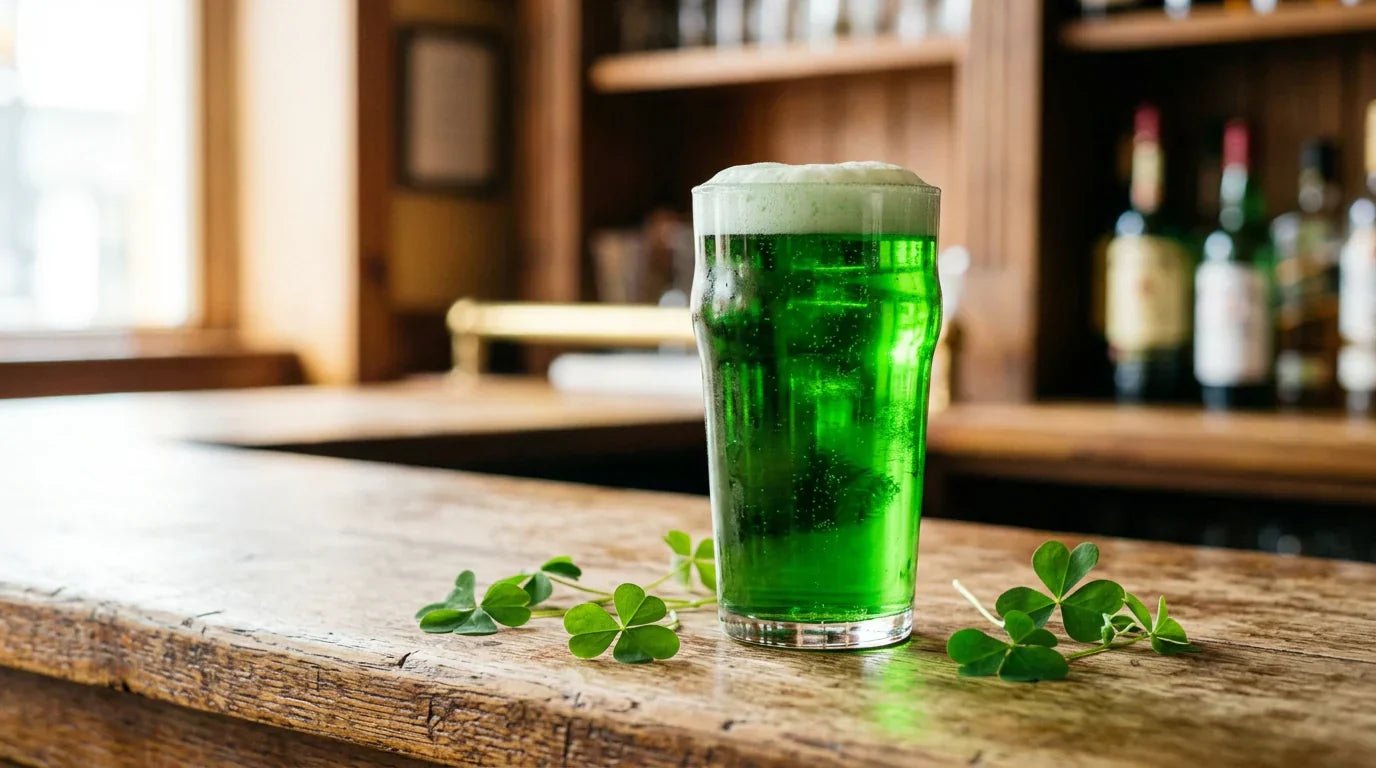
Green beer is one of the most iconic St. Patrick’s Day traditions. Whether you’re hosting a party, heading to a bar, or just celebrating at home, a pint of bright green beer instantly sets the mood. The good news? Making it takes less than a minute with the right technique.
Below, we’ll walk you through five tried-and-tested methods for making green beer, starting with the classic food coloring approach and moving into natural, dye-free alternatives for those who prefer to skip the artificial stuff.
What Is Green Beer?
Green beer is simply regular beer that’s been tinted green, traditionally served on or around St. Patrick’s Day to celebrate Irish heritage. It’s not a special brew or a different style of beer: it’s your favorite lager, pilsner, or pale ale with a green colorant added.
The tradition took off in the United States in the early 1900s and has since become a staple of St. Patrick’s Day celebrations worldwide. Despite what some might assume, green beer is not an Irish tradition; it’s a distinctly American invention. But that hasn’t stopped it from becoming one of the most fun (and photogenic) ways to mark the holiday.
The Quick Version
Short on time? Pour a light-colored beer into a clear glass, add 2–3 drops of green food coloring, and stir gently. That’s it. The food coloring won’t change the taste at all. For a natural alternative, stir in a teaspoon of matcha dissolved in warm water: it adds a subtle earthy flavor and a deep green color.
Which Beer Works Best for Green Beer?
The lighter the beer, the better the green will show. Dark beers like stouts and porters will just look murky, regardless of how much colorant you add. Here’s what to reach for:
Best choices: Light lagers (Bud Light, Coors Light, Miller Lite), pilsners, blonde ales, and wheat beers. These have a pale, golden base that lets the green color come through bright and vivid.
Decent options: Pale ales and IPAs. You’ll get more of an olive or forest green rather than a bright emerald, but it still works.
Avoid: Stouts, porters, amber ales, and anything dark brown or black. The dark color will overpower any green tint.
Browse our beer selection to find the perfect base for your green beer.
Green Beer Methods at a Glance
Here’s a quick comparison to help you pick the right method:
|
Method |
Difficulty |
Taste Impact |
Best Beer Style |
Color Result |
|
Food Coloring |
Very easy |
None |
Any light beer |
Bright emerald |
|
Spinach / Kale |
Moderate |
Minimal |
Lager, pilsner |
Earthy green |
|
Matcha Powder |
Easy |
Earthy, slight sweetness |
Wheat beer, pale ale |
Deep green |
|
Blue Curaçao + Lemonade |
Easy |
Citrusy, slightly sweet |
Blonde ale, wheat |
Bright green |
|
Spirulina |
Easy |
Slight earthiness |
Light lager |
Deep blue-green |

1. Green Food Coloring (The Classic Method)
Best for: Anyone who wants bright green beer in seconds with zero taste change.
This is the easiest and most popular way to make green beer. It takes about 10 seconds and the result is a vivid, Instagram-ready green pint.
How to Do It
Pour your beer into a clear glass. Add 2–3 drops of liquid green food coloring. Stir gently with a spoon or swirl the glass. Add another drop if you want a deeper shade. That’s it.
Tips
Start with fewer drops and work up; it’s easy to go too dark. Gel food coloring also works, but takes longer to dissolve; stick with liquid for the smoothest result. If you’re making a batch for a party, add the food coloring to a pitcher before pouring.
2. Spinach or Kale Juice (Natural & Dye-Free)
Best for: Those who want green beer without food coloring or artificial dyes.
If you’d rather skip the artificial route, fresh spinach or kale produces a surprisingly vivid green tint. It takes a few extra minutes of prep, but the result is a naturally colored beer that tastes virtually the same.
How to Do It
Blend a handful of fresh spinach or kale with about two tablespoons of water until completely smooth. Strain through a fine mesh sieve or cheesecloth, pressing out as much liquid as possible. Discard the pulp and add one to two teaspoons of the green juice to your beer. Stir well.
Tips
Use baby spinach for the mildest flavor. The juice can be made ahead and stored in the fridge for up to 24 hours. A small amount goes a long way; if you add too much, you’ll start tasting the greens.
3. Matcha Powder (Green Tea Twist)
Best for: Anyone who enjoys matcha and wants a unique flavor alongside the green color.
Matcha is finely ground green tea powder that’s rich in antioxidants and naturally a deep, vibrant green. It adds a subtle earthy sweetness to beer that pairs especially well with wheat beers and lighter pale ales.
How to Do It
Dissolve half a teaspoon of matcha powder in a small splash of warm (not boiling) water. Whisk or stir until the powder is fully dissolved with no lumps. Pour the matcha mixture into your beer and stir gently.
Tips
Culinary-grade matcha is perfectly fine for this; save the ceremonial grade for your morning tea. If the matcha clumps, use a small whisk or fork to break them up before adding it to the beer. The flavor is noticeable but pleasant, not overpowering.
4. Blue Curaçao and Lemonade (The Cocktail Approach)
Best for: Those who want a festive beer cocktail with a citrusy kick.
This one’s a bit different: it’s technically a beer cocktail rather than straight green beer. By mixing blue curaçao (a bright blue orange-flavored liqueur) with yellow lemonade and beer, you create a vibrant green drink with a refreshing, slightly fruity taste.
How to Do It
Pour about half an ounce of blue curaçao into the bottom of a glass. Add your beer until the glass is about two-thirds full, then top off with lemonade. Stir gently to blend the colors.
Tips
The ratio matters for getting the right shade of green. Too much curaçao and you’ll get a teal or blue; too much lemonade and it’ll lean yellow. Adjust in small increments. This works best with lighter, less hoppy beers like wheat beers or blonde ales, since bitter beers can clash with the sweetness.
Want more festive drink ideas? Check out our green cocktail recipes for St. Patrick's Day!
5. Spirulina Powder (The Superfood Option)
Best for: Health-conscious drinkers who want a natural green color with added nutrients.
Spirulina is a blue-green algae powder packed with protein, vitamins, and antioxidants. It produces a deep, almost jewel-toned green in beer and is one of the most popular natural food colorants available.
How to Do It
Mix a quarter teaspoon of spirulina powder into a small amount of water and stir until fully dissolved. Pour into your beer and stir gently. The color develops quickly; a little goes a long way.
Tips
Spirulina has a mild oceanic or earthy taste. Using too much will make your beer taste noticeably “green,” so start with a small amount. Look for food-grade spirulina from a reputable source. It’s also worth noting that spirulina-colored beer will look slightly different from food-coloring green, more of a deep teal than a bright emerald.
How to Make Green Beer Without Food Coloring
If you want to avoid artificial dyes entirely, you have three solid options from the methods above: spinach or kale juice, matcha powder, and spirulina. Each produces a different shade of green and brings a slightly different flavor profile.
For the most neutral taste, go with strained spinach juice. For the best overall color-to-flavor balance, matcha is hard to beat. And for the deepest, most dramatic green, spirulina wins. All three are food-safe, natural, and widely available at grocery stores or online.
Green Beer FAQ
Does food coloring change the taste of beer?
No. Standard liquid food coloring is flavorless and odorless. You can add several drops to your beer without noticing any taste difference at all.
Is green beer safe to drink?
Yes. All five methods described here use food-safe ingredients. Whether you’re using FDA-approved food coloring or natural alternatives like matcha and spirulina, green beer is perfectly safe for adults to drink.
What does green beer taste like?
If you use food coloring, it tastes exactly like the beer you started with. Natural methods will add subtle flavors. Matcha adds a mild earthiness, spirulina can taste slightly oceanic, and spinach juice is virtually undetectable in small amounts. The blue curaçao method tastes citrusy and slightly sweet.
Can you make green beer with dark beer like Guinness?
Technically, yes, but the dark color will overpower the green tint. You’d end up with a very dark beer that doesn’t look green at all. Stick with light-colored beers for the best visual result.
How much food coloring do you need for green beer?
Typically, 2-3 drops of liquid green food coloring per pint. Start with 2 drops and add more until you reach your preferred shade. For a full pitcher, you might need 8-12 drops.
Can you make a keg of green beer?
Yes. Add food coloring directly to the keg before serving. You’ll need significantly more, roughly a full small bottle of food coloring for a standard half-barrel keg (15.5 gallons). Stir or gently roll the keg to distribute the color. Natural methods are harder to scale to keg size.
Do pubs in Ireland serve green beer?
Not typically. Green beer is primarily an American tradition. Most pubs in Ireland celebrate St. Patrick’s Day with traditional Irish beers and stouts rather than dyed green beer. You’re much more likely to find green beer in the US, Canada, and parts of Europe.
Raise a Green Pint This St. Patrick’s Day
No matter which method you choose, making green beer is one of the easiest and most festive ways to celebrate St. Patrick’s Day. The food coloring method takes seconds, the natural alternatives let you skip the artificial dyes, and the blue curaçao version adds a fun cocktail twist.
Pick your method, grab your favorite light beer, and enjoy. Sláinte!